-
This is one of the most toxic ideas in current culture, especially Christian culture
-
Disabled Life = Difficult Life? 🤔
What’s wrong with acknowledging that life with a disability is more difficult than without it? In the current Tylenol debate, some believe that it’s “ableist” for parents to want answers, and even hope for treatment or cure, particularly for their profoundly autistic children. Here’s my take, as an adult with a disability ♿️
-
Disability Theology
As astounding as it sounds, this is actually a sincerely held belief among some Christians. And it’s no longer as niche as it once was. Disability theology is a branch of the false and heretical liberation theology, which utilizes Marxist principles. At its core, it’s about reading disability into the Bible, instead of reading the Bible to understand disability. The most egregiously false and heretical claim made in disability theology, is that Jesus Himself is disabled, because He bore the marks of His crucifixion upon His resurrection. However, Jesus bore the marks of His crucifixion as a means of evidence that He is indeed God, just as He claimed to be. It was NOT a means of His identifying with a particular demographic. Have you heard of disability theology before, or even liberation theology?
-
Should we amplify disabled voices? ♿️🗣️
It’s almost the end of July. Most people have been right in the thick of “social justice summer”, with back to back months of pride, beginning in June. But everybody knows about June’s pride month. The perhaps lesser known pride month that follows in July is Disability Pride Month, commemorating the signing of the Americans with Disabilities Act on July 26, 1990. 2023 marks its 33rd anniversary.
But, much like any other online social justice movement, timelines, newsfeeds, and fyp are flooded with a generic “call to action” for allies of “insert marginalized group here” to deliberately amplify/elevate said groups’ voices. So naturally July comes with the call for able bodied allies to amplify the voices of the disabled.
Although this approach may be well intended, ultimately this is logically flawed and unwise.
Here’s why …
You’re wrong because you’re an intolerant bigot!
Ahhh, no argument is complete without one of the most common logical fallacies, the ad hominem. It is a basic and cardinal rule of logic and debate that a person should be going after the content of the argument being made, but never go after the person who is making the argument. In the pursuit of objective truth and reality, the truth of a claim will stand, regardless of who states that claim. For example, 2+2=4 whether a 5 year old says it, Einstein said it, or anyone else. Similarly, if anyone says that 2+2=5, that’s a false statement, no matter who says it (even if it was Einstein).
The problem is that in many current debates (particularly online) it seems that the ultimate “trump card” is to call out one’s opponent as being an intolerant bigot. I find that many times, the accusation has far less to do with the content of the argument, but rather the demographics of the person who is making the claim. The logic seems to follow in this way … if an able bodied man makes a claim, then it must be false (or at least misguided) because he’s a man, able bodied, etc, even if the claim itself is true.
But, what does that have to do with “amplifying disabled voices”?
I’m right because I’m marginalized!
The flip side of this is to claim or assume that one’s argument must be correct, valid, true, or at least hold more weight because of the demographics of the person making the claim. So if the able bodied man must be wrong, then the claims made by a disabled woman must be true. You can include any other demographics that pertain to a person.
The idea is that the disabled are a marginalized group, and so we must be heard over the able bodied in the name of not being “ableist”.
However I would argue that this is actually the “other side of the coin” of the ad hominem fallacy. Truth/falsehood is not dependent on demographics. Claims made by a disabled person can be false. They can also be true. Not at the same time of course. And just because a disabled person says something, that does not necessarily mean that the claim is true or false for that matter. Examine the claim separate from the person making it.
Amplifying disabled voices …
So, for Disability Pride month, should we be amplifying/elevating disabled voices? Well, that depends on what they are saying. Is it true? Can it be proven? Does the claim have decent evidence for it? Is it logical? Can the claim be tested? Most importantly, does the statement align with the Word of God?
Rather than putting such an emphasis on elevating disabled voices, elevate true claims, elevate God’s Word.
When you elevate truth, you’ll find both the disabled and able bodied are stating claims that are objectively true.
-
Happy Resurrection Day 2023
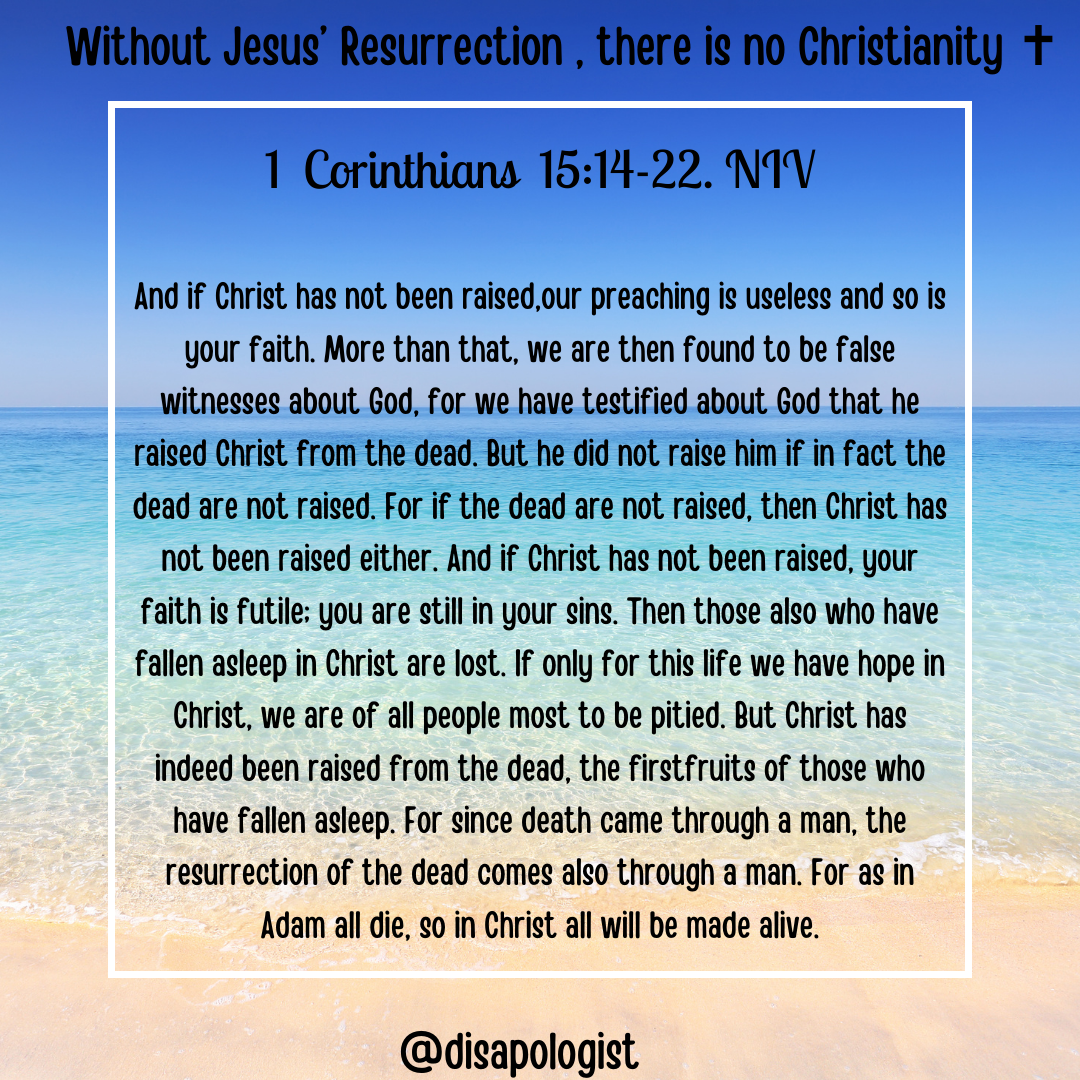
Remember dear friends, the whole of Christianity depends on this one single most life changing event to ever occur in human history!
-
Unshaken Conference

Less than 2 weeks away! Get tickets while you can!

The DisApologist ✝️♿️
Hi! At the DisApologist we talk apologetics and disability.
 The DisApologist ✝️♿️